A Method for Emerging Contaminants from Tire Particles in Salmon
For over 20 years, scientists noticed massive losses of coho salmon in Washington, USA’s Puget Sound. The coho salmon have cultural, ecological, and economic value. Some coho salmon populations are currently listed as endangered or threatened. It was discovered from extensive research that the main mechanism of transport endangering coho salmon was from stormwater runoff from roads. The compound that was causing the mortalities in salmon was determined to be 6PPD-Quinone. 6PPD-Quinone is a transformation product of the tire rubber antioxidant 6PPD (N-(1,3-dimethylbutyl)-N′-phenyl-p-phenylenediamine) that forms when tires react with ozone. . Testing and awareness of these transformation products of tire antioxidants is exponentially growing as more studies are being conducted. A subset of this testing is being done by tire manufacturers and ecotoxicologists to evaluate if other substituted p-phenylenediamine compounds can be used as safer alternatives. Examples include CPPD, which has a cyclohexyl side chain, and 7PPD, which differs from 6PPD by having a different pattern of methyl branching on its alkyl side chain.
To address the growing concern over the PPD transformation products and their effects on salmonid species, UCT has developed a QuEChERS-based extraction, cleanup, and LC-
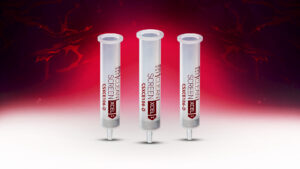
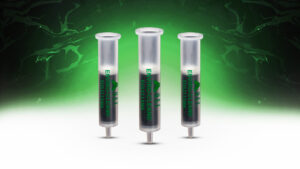
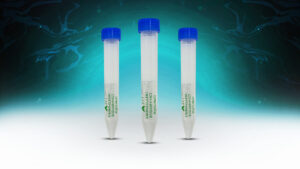
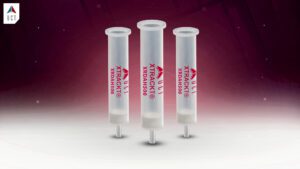
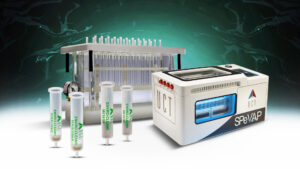
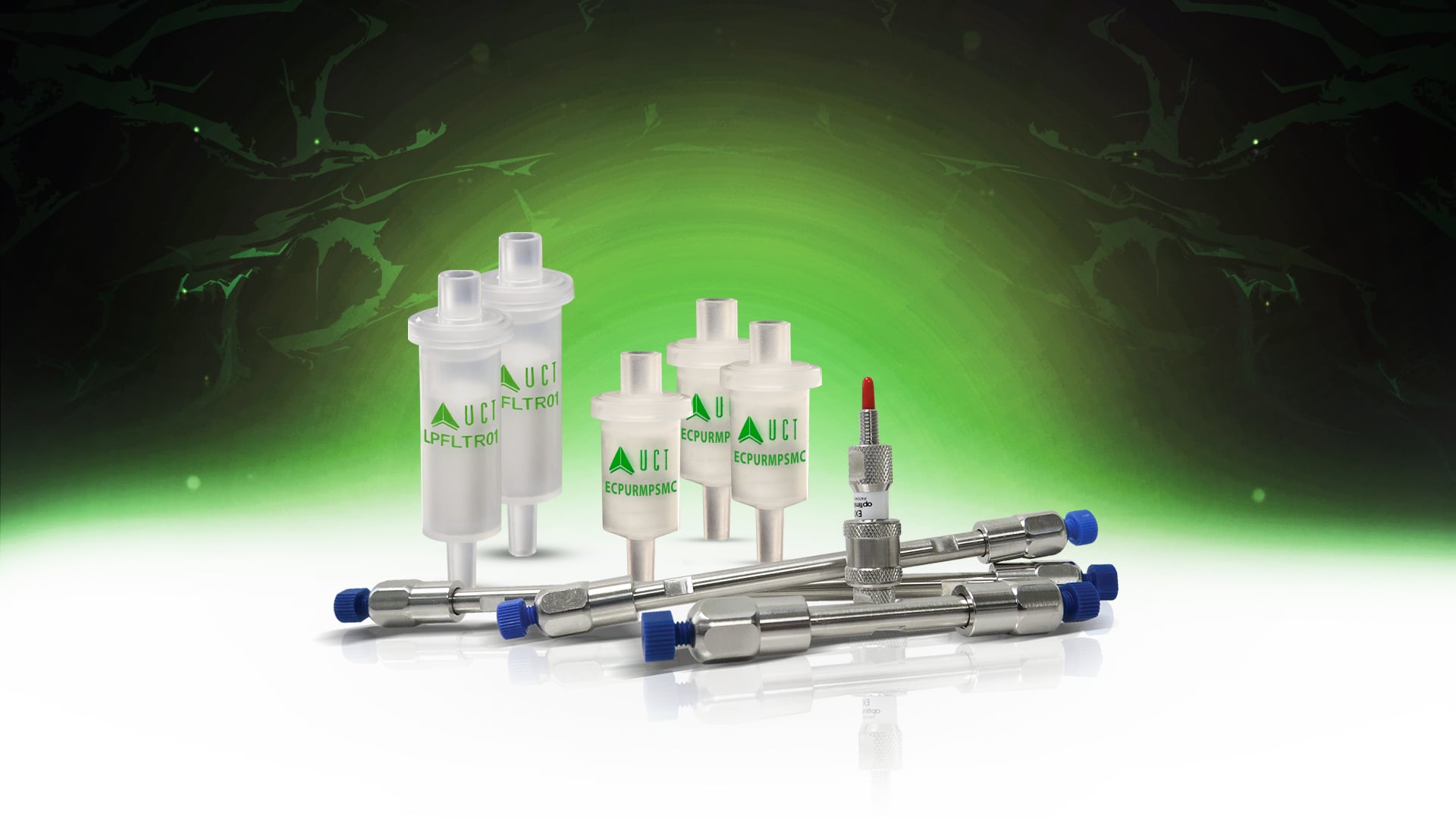
MS/MS method on various PPD-Quinones in salmon tissue. A large focus of the study was to clean up as many matrix components as possible, to achieve detection limits that were relevant to coho salmon toxicities, as it has been found to be lethal to juvenile coho salmon at concentrations as low as 0.094 ng/mL. The method employed a QuEChERS extraction followed by a novel cleanup technique, utilizing UCT’s push-thru cartridges such as Quick QuEChERS, C18, and LipiFiltr in series. Quick QuEChERS helps to remove short-chain acids and sugars. C18 removes the high amount of carotenoid pigments co-extracted with the sample, while LipiFiltr removes stubborn lipids & fats – a crucial component, based on the fact that salmon tissue can contain up to 16% fat. The extracts are analyzed on a core-shell C18 HPLC column using LC-MS/MS. A matrix- matched calibration, followed by limit of detection and limit of quantitation studies, determines accuracy and precision. 6PPD-Q, the compound of interest, is calculated using extracted isotope dilution, with the remaining PPD-Qs calculated using an extracted internal standard. The final analysis can achieve a 0.073 ng/g detection limit and minimize matrix effect to below 12%. With a combination of sorbent chemistries, this clean-up allows for low detection limits relevant to testing fish tissue.
See the application note on our website: https://www.unitedchem.com/wp-content/uploads/2024/09/6PPD_Quinone_in_Fish_Tissue_Application_Note-1.pdf