
What is QuEChERS?
The gold standard for sample preparation in pesticide residue analysis. A simple, fast, and cost-effective method used in laboratories worldwide.
QuEChERS (pronounced “catchers”) is a sample preparation method used for detecting pesticide residues, veterinary drugs, mycotoxins, and other contaminants in food, agricultural, and environmental samples. The acronym stands for Quick, Easy, Cheap, Effective, Rugged, and Safe — six principles that define the method’s core advantages over traditional extraction techniques. Since its introduction in 2003 by Anastassiades, Lehotay, Stajnbaher, and Schenck at the USDA, QuEChERS has become the most widely adopted sample preparation approach in residue analysis laboratories worldwide. UCT was the first company to commercialize QuEChERS products, and continues to lead the field with proprietary sorbent technologies including ChloroFiltr® and LipiFiltr®.
A Versatile Method for Modern Labs
Originally developed by the USDA for fruit and vegetable analysis, QuEChERS has evolved into the go-to method across agricultural and food safety domains. Validated through official methods including AOAC 2007.01 and EN 15662, it delivers consistent, reliable results worldwide.
The versatility of QuEChERS stems from its adaptable two-stage workflow: a solvent extraction step followed by a dispersive solid-phase extraction (dSPE) cleanup. By adjusting the extraction salts, buffer conditions, and cleanup sorbents, analysts can tailor the method to virtually any combination of matrix and target compound. Three standardized versions of the method — the Original unbuffered method, AOAC 2007.01 (acetate buffered), and EN 15662 (citrate buffered) — provide validated starting points for method development, while the underlying flexibility allows laboratories to optimize for their specific analytical requirements. UCT offers over 230 QuEChERS products covering all three methods in multiple formats.
Food Safety Testing
QuEChERS is the method of choice for multi-residue pesticide screening in produce, grains, meat, dairy, honey, juice, wine, and other food products. Regulatory agencies around the world rely on QuEChERS-based methods to monitor compliance with maximum residue limits (MRLs) for hundreds of pesticide compounds simultaneously. Explore UCT’s full range of QuEChERS extraction and cleanup products.
Diverse Matrices
Beyond traditional fruits and vegetables, the method has been successfully adapted for complex matrices including high-fat foods (avocado, nuts, olive oil), animal tissues (liver, kidney, muscle), cereals and grains, tobacco, cannabis, soil, and water. Each matrix type may require specific salt ratios or additional cleanup sorbents to manage interferences.
Enhanced Productivity
A single analyst can prepare large sample batches significantly faster using the QuEChERS approach. Compared to traditional liquid-liquid extraction methods that require large volumes of hazardous solvents and hours of processing time, QuEChERS dramatically reduces labor, solvent consumption, and waste generation.
Consistent Results
When performed with pre-packaged, quality-controlled extraction salts and dSPE tubes, the QuEChERS method consistently delivers high recoveries with excellent reproducibility for a broad range of GC- and LC-amenable compounds — critical for meeting stringent regulatory quality assurance requirements.
Three Simple Steps
QuEChERS condenses sample preparation into an efficient, streamlined process that eliminates the complexity of traditional extraction techniques. While variations exist across the three official methods, the fundamental procedure follows the same core steps.
Sample Extraction
Extract target analytes from your sample matrix using optimized solvent ratios and salt combinations.
Clean-Up
Remove matrix interferences using dispersive SPE sorbents tailored to your application needs.
Instrumental Analysis
Analyze purified extracts via LC/MS/MS or GC/MS for accurate quantification.
Step 1: Sample Extraction
The process begins with a homogenized sample — typically 10 to 15 grams of food material that has been thoroughly blended to ensure uniform distribution of analytes. Acetonitrile is added as the extraction solvent because it provides excellent recovery for a broad range of pesticide polarities while producing minimal co-extraction of lipids compared to other solvents. The sample and solvent are vigorously shaken or vortexed to facilitate contact between the solvent and the matrix.
Next, a pre-measured combination of extraction salts is added. The specific salt mixture depends on the method being used: the Original method uses magnesium sulfate (MgSO₄) and sodium chloride (NaCl); AOAC 2007.01 uses MgSO₄ and sodium acetate (NaOAc) with 1% acetic acid in the acetonitrile; EN 15662 uses MgSO₄, NaCl, and a pair of citrate buffer salts. The salts serve two critical purposes — magnesium sulfate drives phase separation between the aqueous and organic layers (a process called “salting out”) and removes residual water, while the additional salts control pH and improve recovery of pH-sensitive analytes. After adding salts, the tube is shaken vigorously for one minute and then centrifuged, producing a clear organic supernatant layer containing the extracted analytes.
Step 2: Dispersive SPE Clean-Up
An aliquot of the organic supernatant is transferred into a second tube containing pre-weighed dSPE sorbents and additional MgSO₄. The sorbents selectively adsorb matrix interferences — co-extracted compounds like organic acids, sugars, lipids, pigments, and sterols that would otherwise interfere with chromatographic analysis and damage sensitive instrumentation.
Primary Secondary Amine (PSA) is the most commonly used dSPE sorbent and is effective at removing organic acids, certain sugars, and fatty acids. For samples with higher lipid content, C18 sorbent is added to target additional fats and nonpolar interferences. Samples rich in chlorophyll (such as leafy greens, herbs, and tea) require a pigment-removal sorbent — UCT’s proprietary ChloroFiltr® sorbent offers selective chlorophyll removal without the loss of planar analytes that traditional graphitized carbon black (GCB) can cause. The tube is shaken briefly, centrifuged again, and the resulting clean extract is ready for instrumental analysis.
Step 3: Instrumental Analysis
The purified extract is transferred to an autosampler vial and analyzed by gas chromatography coupled with mass spectrometry (GC-MS or GC-MS/MS) or liquid chromatography with mass spectrometry (LC-MS or LC-MS/MS). Because the extract is in acetonitrile, it is directly compatible with both LC and GC systems. Many laboratories run both GC and LC analyses on the same extract to maximize the number of detectable compounds, since some pesticides are more amenable to one technique than the other. The entire process — from raw sample to instrument-ready extract — takes approximately 15 to 30 minutes per sample, a fraction of the time required by legacy extraction methods.
Extraction & Clean-Up Reagents
Understanding each reagent’s function is essential for selecting the right QuEChERS products and troubleshooting extraction issues. QuEChERS salts play a critical role in extraction efficiency, phase separation, moisture removal, and analyte recovery. Each component in the QuEChERS workflow serves a specific analytical function.
Extraction Reagents
- Functions as a partitioning aid in extraction, driving phase separation between aqueous and organic layers
- Acts as a powerful desiccant during clean-up, absorbing residual water from the acetonitrile extract
- Present in all three official QuEChERS methods and all dSPE cleanup blends
- Assists in “salting out” polar analytes from the aqueous phase into the organic solvent layer
- Used in the Original and EN 15662 methods to improve partitioning and recovery of moderately polar compounds
- The buffering salt used in the AOAC 2007.01 method, creating an acetate buffer at approximately pH 4.8
- Protects base-sensitive analytes such as folpet, captan, chlorothalonil, and dichlofluanid from degradation during extraction
- Trisodium citrate dihydrate and disodium hydrogen citrate sesquihydrate form the citrate buffer pair used in the EN 15662 method
- Establishes a buffer at approximately pH 5.0–5.5, offering gentler buffering preferred by many European laboratories
Clean-Up Reagents
- The primary dSPE sorbent used across all QuEChERS methods
- Binds and removes organic acids (citric, malic, acetic acid), certain polar pigments, some sugars, and fatty acids
- Amount must be carefully optimized — excessive PSA can lower recovery of acidic analytes of interest
- A nonpolar reversed-phase sorbent that removes lipids, fatty acids, and other hydrophobic matrix components
- Typically combined with PSA for samples with moderate to high fat content such as avocado, nuts, meat, and dairy
- Used for removing pigments including chlorophyll and carotenoids from plant-based samples
- Has the well-documented drawback of retaining planar analytes — consider ChloroFiltr® as an alternative
Available Formats
UCT offers QuEChERS products in multiple convenient formats to fit different laboratory workflows, throughput requirements, and automation configurations.
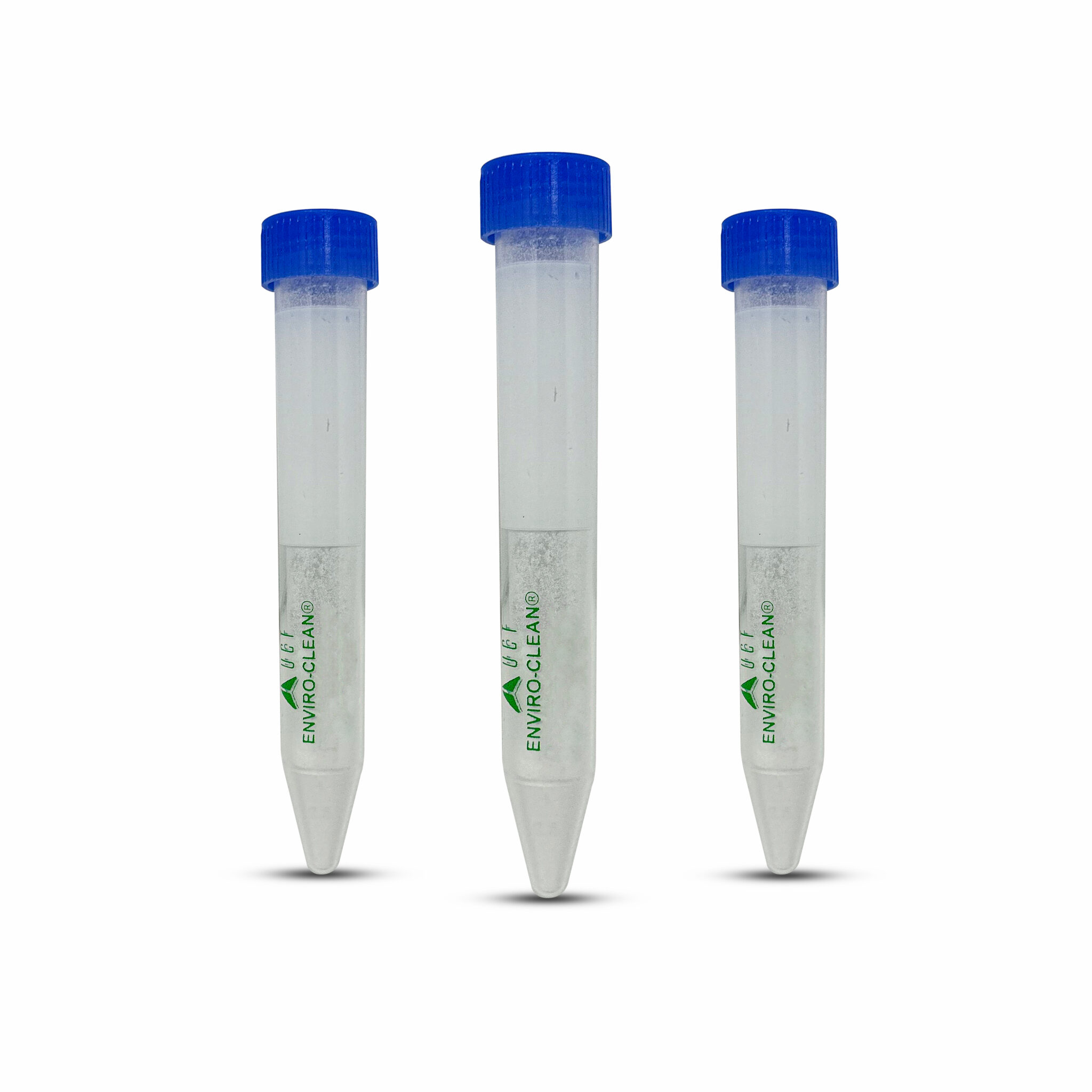
Centrifuge Tubes
Pre-packed polypropylene centrifuge tubes containing accurately weighed extraction salts or dSPE sorbent blends. Available in 2 mL, 15 mL, and 50 mL sizes — compatible with all standard laboratory centrifuges.
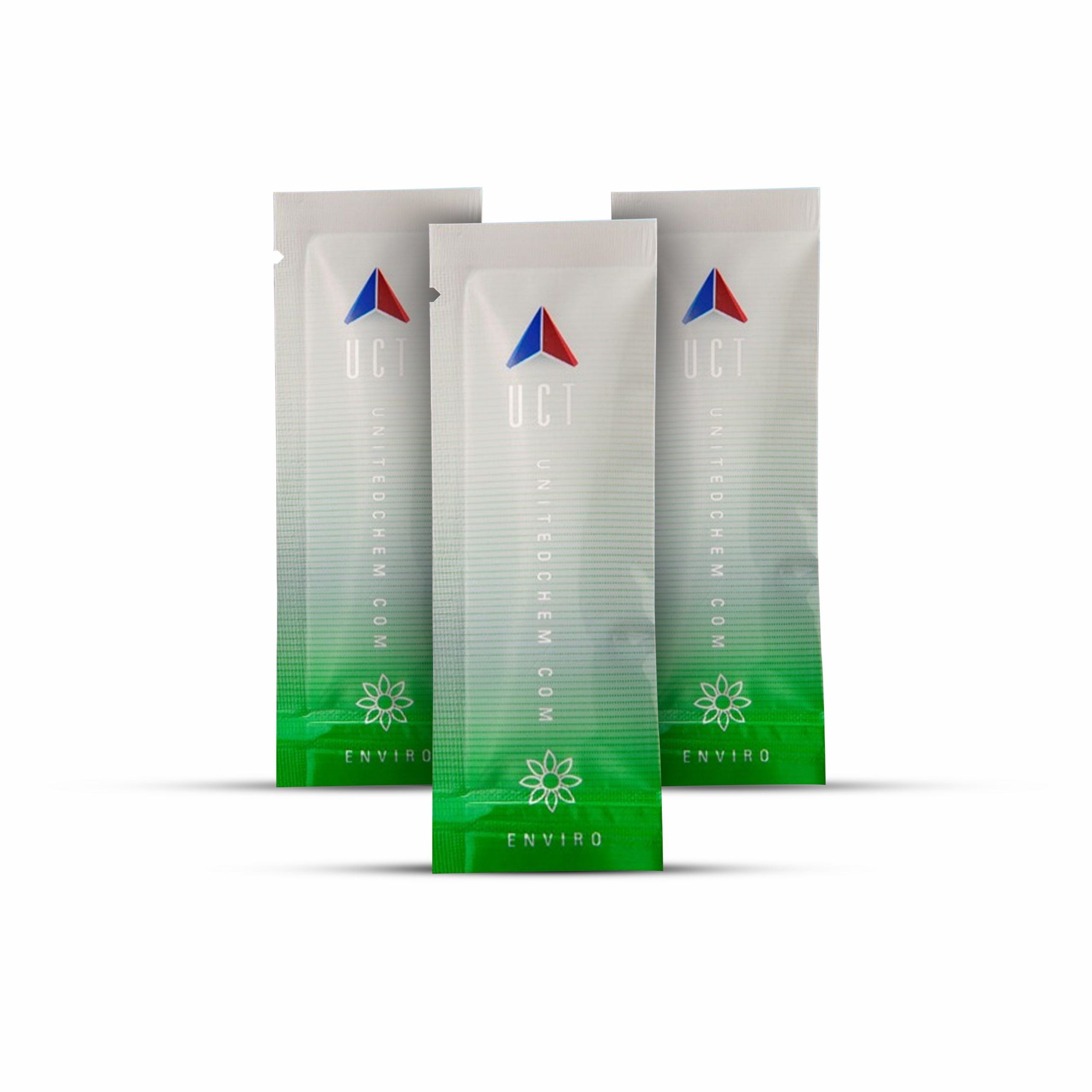
Mylar Pouches
Single-use foil pouches containing pre-weighed extraction salts. Add the contents to your own centrifuge tube for flexible workflows — ideal for laboratories that prefer to use their own tubes.
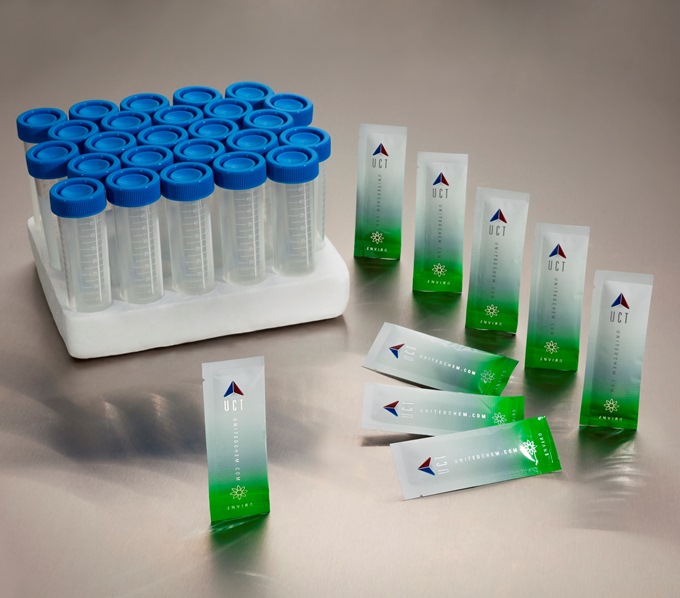
Multi-Packs
Pre-packed Mylar pouches bundled with empty centrifuge tubes for maximum convenience and cost savings.
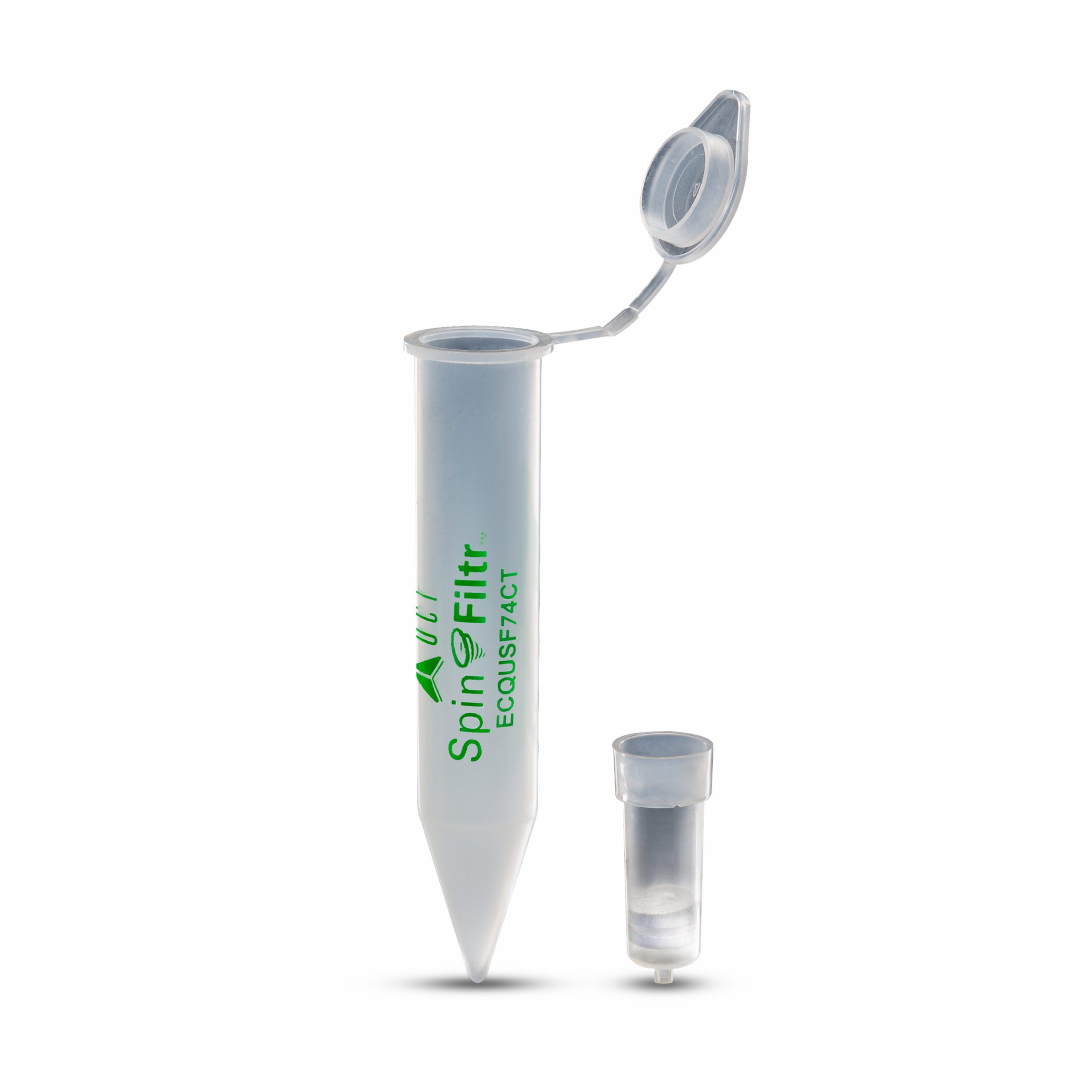
SpinFiltr®
UCT’s innovative format combining dSPE sorbents with a 0.2 µm ultrafiltration membrane. Performs cleanup and filtration simultaneously, eliminating the separate filtration step and saving time.
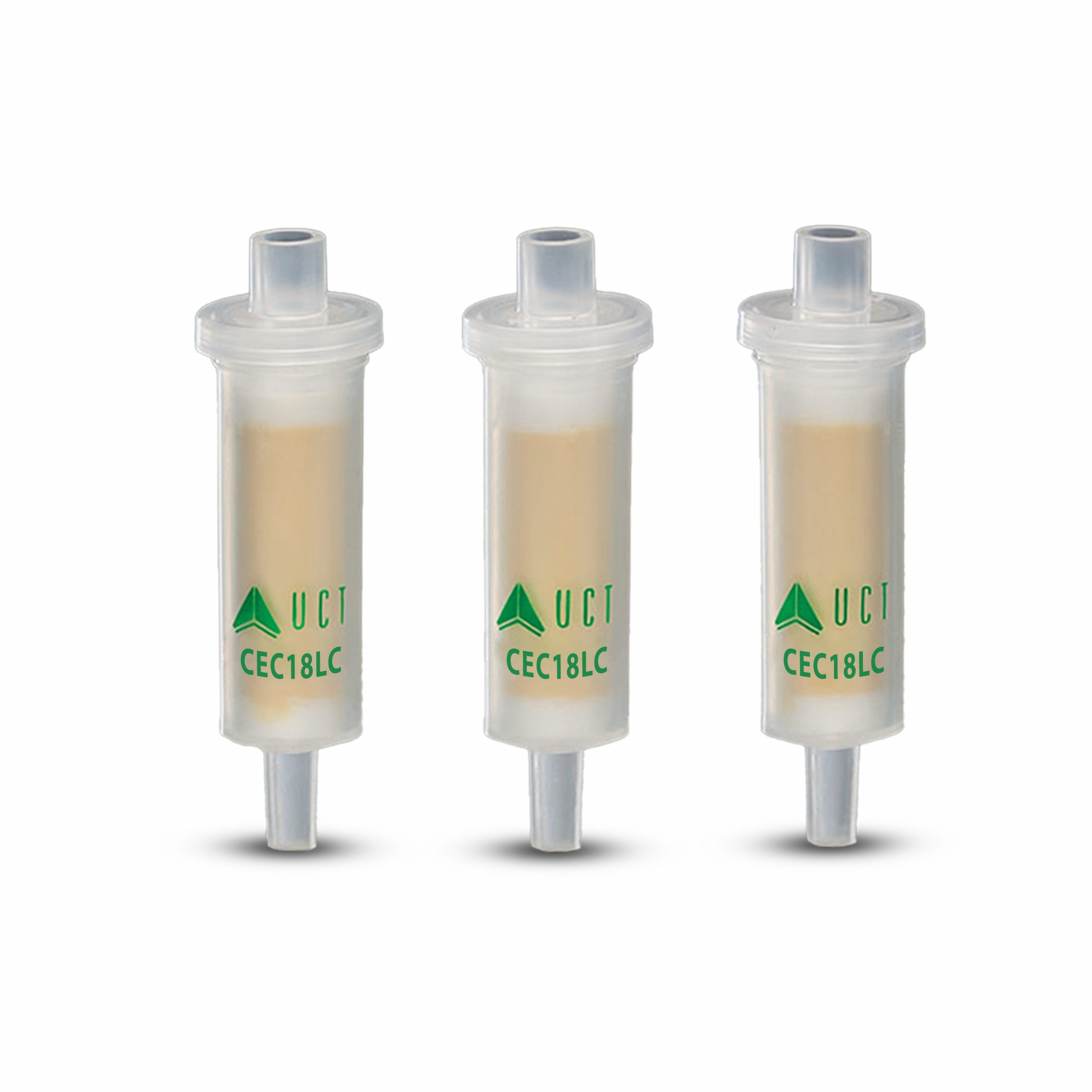
Push-Thru Cartridges
Rapid cleanup without shaking or centrifugation — draw the extract into a syringe, push it through, and collect directly into an autosampler vial. Ideal for fast single-sample processing.
Innovative Sorbent Chemistries
Proprietary technologies developed by UCT for superior sample clean-up. These sorbents address the most common challenges in QuEChERS sample preparation.
UCT’s research and development program has produced proprietary sorbent technologies that solve longstanding problems in QuEChERS cleanup. Traditional sorbents often force analysts to compromise between clean extracts and complete analyte recovery. UCT’s exclusive chemistries eliminate that compromise, providing cleaner baselines, reduced instrument maintenance, and more reliable quantitation across challenging sample matrices.
ChloroFiltr®
A novel polymeric sorbent developed to solve one of the longest-standing problems in QuEChERS cleanup: removing chlorophyll from green-matrix samples without sacrificing planar analyte recovery.
LipiFiltr®
A specialized sorbent designed for enhanced lipid removal from fatty matrices. LipiFiltr® provides aggressive lipid removal beyond what standard PSA/C18 combinations can achieve.
Glyphosate Purification
Sorbents that address the unique analytical challenges of glyphosate and its metabolite AMPA.
Frequently Asked Questions
Common questions about the QuEChERS method and its applications.
What does QuEChERS stand for?
QuEChERS stands for Quick, Easy, Cheap, Effective, Rugged, and Safe.
What types of samples can be analyzed using QuEChERS?
The QuEChERS method has been adapted for a broad range of matrices including produce, grains, high-fat foods, animal products, beverages, cannabis/hemp, soil, and sediment.
Is QuEChERS compatible with LC-MS and GC-MS?
Yes. The acetonitrile extract is compatible with both LC-MS/MS and GC-MS/MS workflows.
What is the difference between AOAC and EN methods?
Original is unbuffered; AOAC uses acetate buffer (~pH 4.8); EN uses citrate buffer (~pH 5.0–5.5).
What are QuEChERS salts used for?
QuEChERS salts are used during the extraction step to promote phase separation, remove excess water, and improve analyte recovery. Common formulations include magnesium sulfate, sodium chloride, sodium acetate, and citrate buffering salts depending on the selected QuEChERS method.
How long does a QuEChERS extraction take?
Typically 15–30 minutes per sample, with batch processing allowing 20+ samples in under an hour.
What are the main clean-up sorbent options?
Common dSPE sorbents include PSA and C18, plus pigment-removal options like ChloroFiltr® and lipid-focused options like LipiFiltr® depending on your matrix.
Ready to Optimize Your Sample Prep?
Explore our complete line of 230+ QuEChERS products designed for your laboratory needs.
Exploring other SPE applications? Environmental SPE Products