Non-Targeted Screening of Chloramine-Reactive Compounds: Uncovering Hidden NDMA Precursors
Disinfection is a crucial step in delivering safe drinking water, and chloramines, particularly monochloramine, are widely used in the U.S. for their ability to maintain a stable disinfectant residual and reduce the formation of halogenated disinfection byproducts. However, they come with a hidden cost: the potential formation of
nitrosamines, especially N-nitrosodimethylamine (NDMA), a human carcinogen. NDMA can form from a wide variety of nitrogen-containing compounds found in the environment, such as pharmaceuticals, pesticides, personal care products, and even residues from agriculture and wastewater. Despite this broad range of sources, only a small percentage of NDMA formation has been attributed to known compounds. This
makes it difficult to fully understand or control its occurrence in water systems.
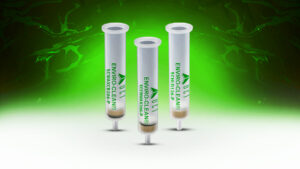
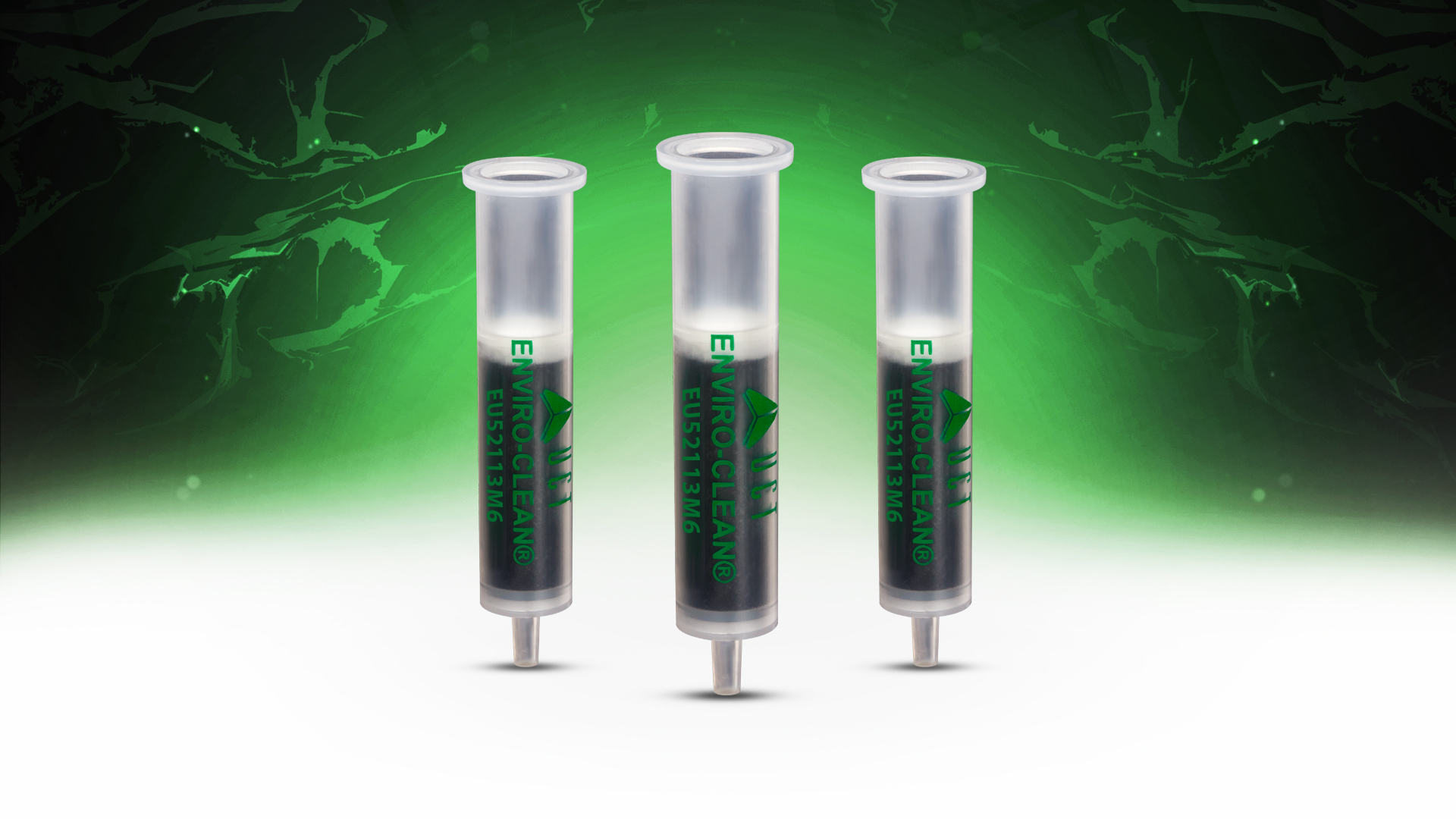
To address this challenge, researchers developed a non-targeted analysis (NTA) method using ultrahigh performance liquid chromatography coupled with quadrupole time-of-flight mass spectrometry (UHPLC/QTOF-MS). The method compares chemical features in water samples collected before and after chloramination. The goal was to identify compounds that degrade during disinfection and may serve as NDMA precursors. 1 A critical part of this study was NDMA determination which was performed by quantifying NDMA formed using solid-phase extraction (SPE) and LC-MS-MS. For sample extraction, the team used Enviro-Clean® 521 SPE columns, a UCT product specifically design for EPA Method 521, which proved essential in isolating NDMA from complex water matrices. These carbon-based cartridges enabled effective recovery of trace-level nitrosamines, supporting reliable and sensitive quantification.
In this study, researchers identified 31 nitrogen-containing compounds that reacted with chloramine, including 14 previously known NDMA precursors. The findings highlight the impact of human activity on introducing such precursors into surface waters and demonstrate the value of non-targeted screening for detecting potentially harmful compounds often missed by targeted methods. A key outcome was the use of a chloramine degradation ratio, which measures how much a compound’s signal is reduced after treatment and serves as an indicator of its reactivity. This metric proved effective in identifying likely contributors to NDMA formation and other disinfection byproducts (DBPs). While improvements such as optimized extraction protocols and confirmation of compound identities using authentic standards could improve this NTA method, this approach represents a significant step forward in identifying chloramine-reactive, nitrogen-containing compounds and underscores the importance of robust sample preparation in water quality monitoring.
Li, J.; Dalluge, J. J.; Hozalski, R. M.; Arnold, W. A. Investigation of Chloramine Reactive
Pollutants via UHPLC/High-Resolution Mass Spectrometry to Assess Potential
Nitrosamine Precursors. ACS ES&T Water 2025, 5 (7), 4211–4222.
https://doi.org/10.1021/acsestwater.5c00437.