Rising ketamine levels in Australian wastewater found using Clean Screen XtrackT ®
Solid phase extraction (SPE) cartridges from UCT were used in a recent study assessing Australian trends in ketamine use through wastewater-based epidemiology.
Ketamine has long existed as a pharmaceutical anesthetic but is also abused recreationally. It is starting to be accepted as a possible treatment for mental health disorders and as this idea becomes more widely publicized, people may be influenced to use ketamine non-medically. A group of researchers from the University of South Australia sought out to analyze trends in ketamine loads in wastewater to discern possible patterns of non-medical use.
Wastewater samples were collected for 7 days every four months from December 2020 to April 2025 across 50 different wastewater treatment sites. Each day, 24-hr samples were collected in PET bottles containing sodium metabisulfite and frozen until analysis.
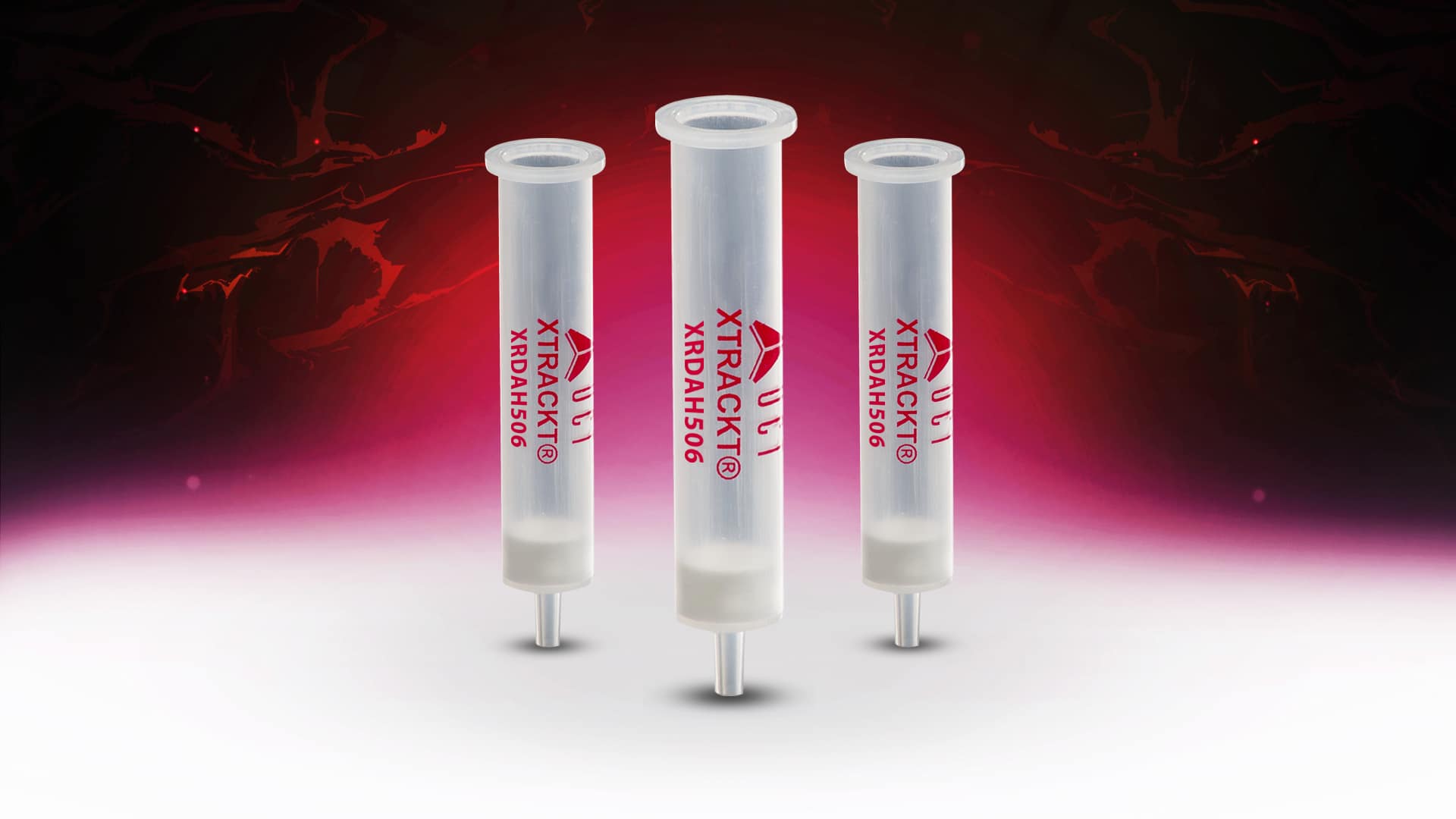
Samples were extracted using Clean Screen XtrackT ® DAU columns (500 mg, 6 mL). The XtrackT ® line of SPE products contain large particle (80-200 μm) silica, allowing higher flow rates and preventing clogging when extracting viscous or complex samples, such as wastewater. In this study, samples were carried through a previously validated SPE procedure. Wastewater samples were pH adjusted using 10% acetic acid before being loaded onto XRDAH506 columns previously conditioned with methanol and sodium acetate buffer. Cartridges were washed with sodium acetate buffer, 0.1M acetic acid, and methanol before elution with dichloromethane: isopropanol: ammonia (80:16:4). Samples were evaporated and reconstituted for analysis. Using solid phase extraction allowed samples to be concentrated by a factor of 1000. The major metabolite of ketamine, norketamine, was then
quantitated by LC-MS/MS and converted to units of mg norketamine excreted/day/1000 people.
Throughout the collection period, norketamine was detected in 88% of samples with average concentrations increasing from 2.7 to 5.8 mg/day/1000 people. Additional variables were compared including remoteness of collection site, connection to business districts, and socioeconomic status of the general population represented by each sample. Trends were also analyzed by day of the week with population normalized mass loads being higher on weekends than other days of the week, suggesting non-medical use of ketamine. Higher mass loads were also associated with inner city areas and areas of higher socioeconomic status.
This study used UCT XtrackT ® columns to successfully analyze norketamine in wastewater samples to gain useful insight into trends and highlight the importance of wastewater-based epidemiology when assessing trends of drug use. Details of the study and results are outlined in the publication “Weekend highs: Rising ketamine levels in
Australian wastewater”
While Clean Screen XtrackT ® columns were initially designed to analyze urine of racing animals, their large particle size and high flow can also be useful for environmental applications!
References:
Keller, E., et al, 2026. Weekend highs : Rising ketamine levels in Australian wastewater. Journal of Environmental
Advances. 23, 100687. https:// doi.org/10.1016/j.envadv.2026.100687
Bade, R., et al., 2019. Simultaneous determination of 24 opioids, stimulants and new psychoactive substances in
wastewater. MethodsX. 6, 953–960. https://doi.org/10.1016/j.mex.2019.04.016