UCT Silanes in Action: Stabilizing Next-Generation EV Battery Anodes
We love highlighting research that features chemicals offered by UCT, and sometimes the most exciting stories come from seeing how our products perform in real-world applications. OneD Battery Sciences (OneD Material LLC) is pushing the boundaries of electric vehicle (EV) battery performance with its SINANODE® technology, which integrates silicon nanowires into EV-grade graphite anodes.
Silicon-containing anodes promise higher energy density than conventional graphite, but they face well-known challenges: volume expansion during cycling, mechanical fracture, loss of conductivity, and rapid capacity fade. To overcome these hurdles, OneD explored ways to both stabilize the anode and monitor its behavior more precisely.
In a unique approach described in their patent, OneD incorporated two reference electrodes into a test pouch cell. Unlike standard EV batteries, which only measure total cell voltage, this design enables direct monitoring of both anode and cathode potentials. This helps prevent potential drift during formation and cycling, supporting more stable battery performance over time.
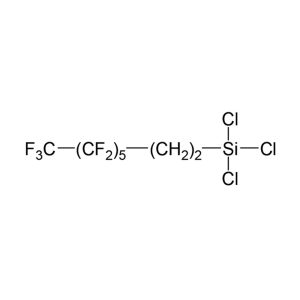
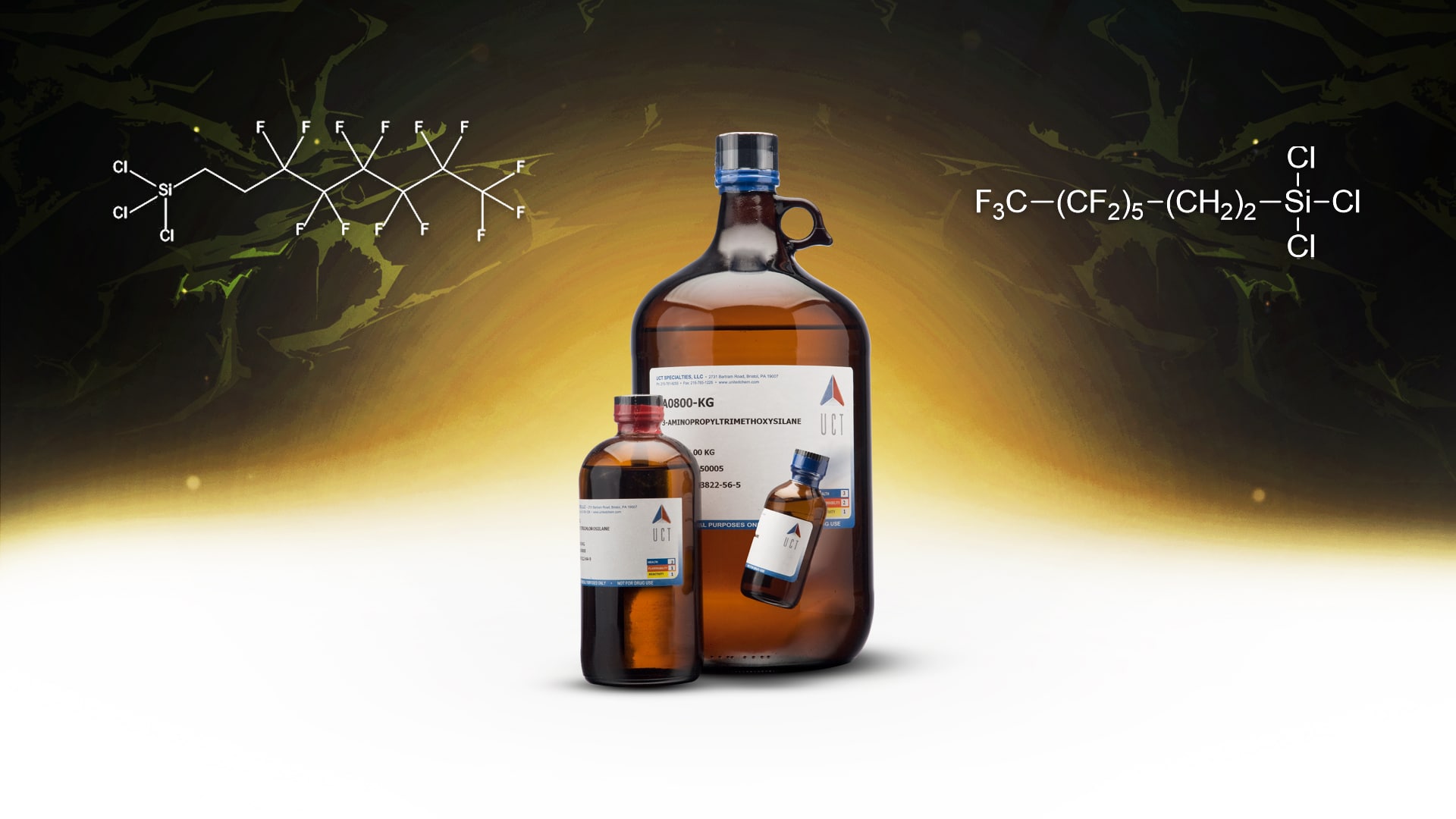
UCT silanes play a key role in enhancing anode stability. Silicon composite anodes are highly sensitive to moisture, as moisture can negatively impact performance and cycle life. OneD addressed this by using UCT’s (tridecafluoro-1,1,2,2-tetrahydrooctyl) trichlorosilane (T2492) to create hydrophobic surfaces on the silicon-containing particles. This moisture-resistant coating protects the anode during electrode processing and improves long-term stability.
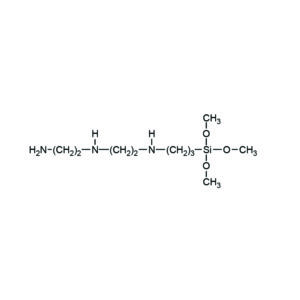
But the benefits don’t stop at moisture resistance. Functional silanes from UCT, a total of 64 UCT products listed – can also tailor the surface chemistry of anode particles, influencing how they interact with binders, electrolytes, and other electrode components. By adjusting surface interactions, researchers can improve electrode uniformity and overall performance. OneD’s patent lists a wide range of UCT silanes that can be applied to achieve specific surface properties, demonstrating the versatility of our portfolio in high-performance battery applications.
Thanks to UCT silanes and OneD’s innovative approach, the patent highlights improvements such as enhanced capacity retention over extended cycling, reduced reference-electrode potential drift, and more stable silicon-containing anodes. As OneD continues to explore anodes with silicon deposited as nanowires or thin films, UCT silanes remain an enabling technology for the next generation of lithium-ion batteries.
Citation: Zhu, Y.; Du, C. Anode, Cell, and Method of Stabilizing an Anode for Use in a Lithium Ion Electrochemical Cell. US20170012325A1, 2019.
https://patents.google.com/patent/US20170012325A1/en
(Tridecafluoro-1,1,2,2-tetrahydrooctyl) trichlorosilane (T2492)