Another Dangerous Persistent Organic Pollutant (POP)
Hexabromocyclododecane (HBCD), a brominated flame retardant commonly used in building materials, textiles, and electronics, has significantly improved fire safety. However, recent studies have sounded the alarm about its environmental persistence and, more importantly, its potential health risks, making it a matter of grave concern.

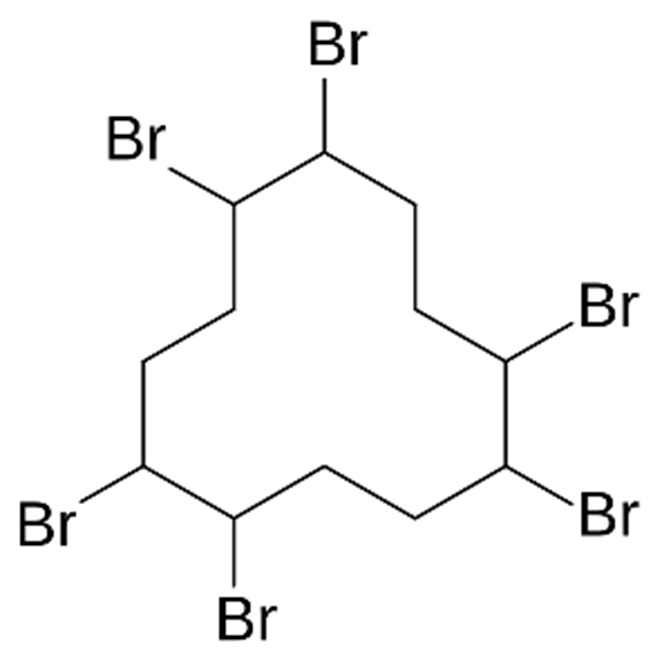
HBCD has a cyclic structure with bromines covalently bonded to the carbon ring. It has a molar mass of 641.7 g/mol and a melting point of 186°C. It is very hydrophobic, with a water solubility of 3.4 µg/L, making it fat-soluble in animal life. HBCD is a mixture of 16 different stereoisomers, which can have varying biological activities and toxicities.

HBCD is known for its persistence in the environment. It doesn’t break down easily, leading to long-term environmental presence. This characteristic also means it can bioaccumulate in living organisms, posing risks to wildlife and humans. HBCD is highly toxic to aquatic organisms. It has been detected in various marine and freshwater environments, where it can disrupt the reproduction and development of aquatic species and ecosystems.

Animal studies have shown that HBCD can interfere with reproductive systems, causing reduced fertility and developmental issues. It is an endocrine disruptor, affecting hormone balance and leading to adverse developmental, reproductive, neurological, and immune effects. Exposure to HBCD has been linked to behavioral changes and cognitive deficits, particularly in developing organisms.

HBCD, highly persistent and capable of traveling long distances through air and water, has been detected in various environmental settings, including soil, water bodies, wildlife, and biological samples, including fish, birds, and even human tissues such as blood and adipose tissue. This widespread detection underscores the pervasiveness of the issue, making it a matter of immediate concern.

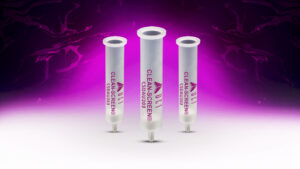
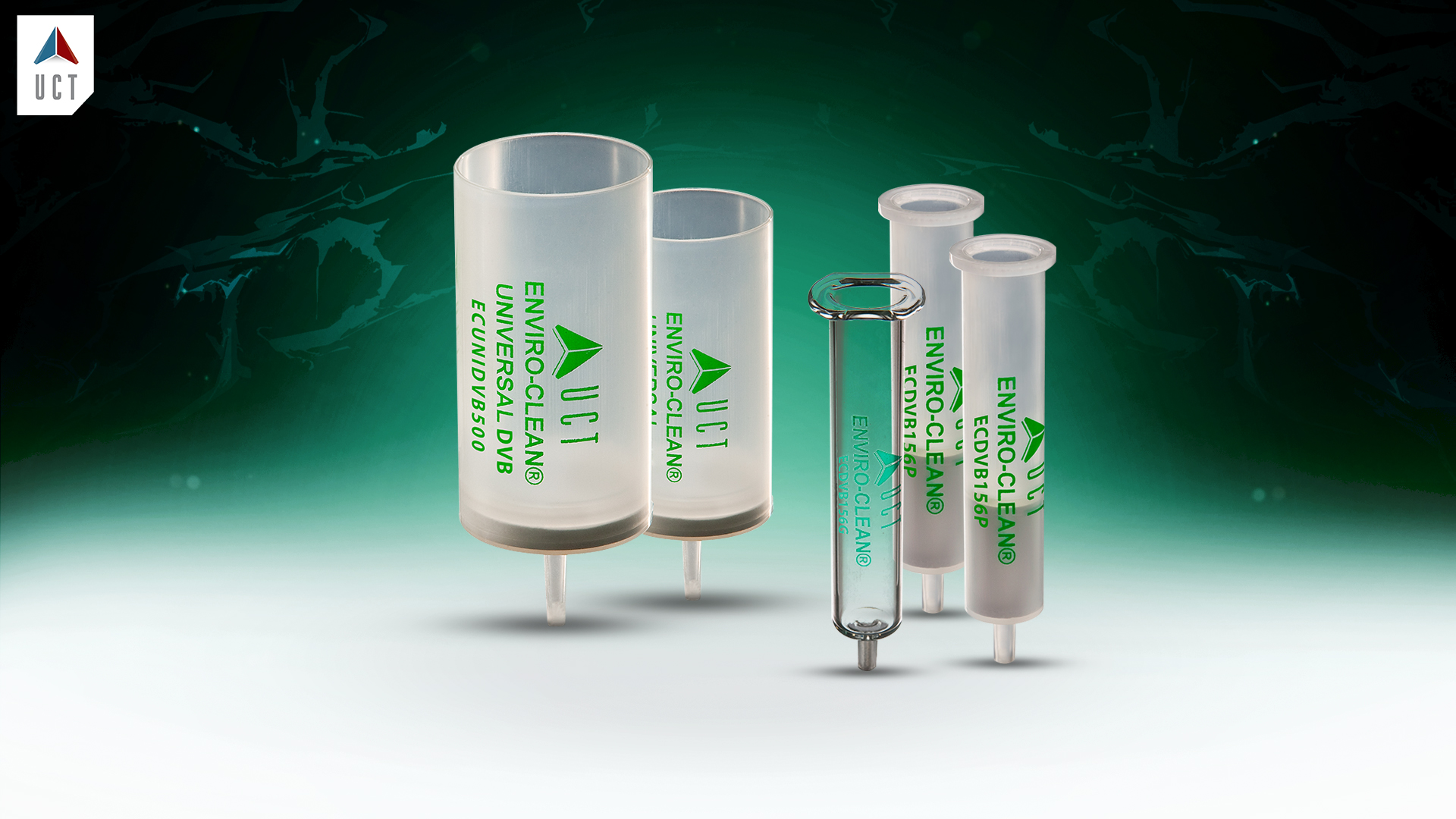
Hexabromocyclododecane (HBCD) is easily extracted using US EPA Method 527 and UCT products ECUNIDVB (Universal Cartridge), ECDVB156P (500 mg, 6 mL PP cartridge) or ECDVB156G (Glass cartridge).

Image Credit:

Hexabromocyclododecane. (2024, October 22). In Wikipedia. https://en.wikipedia.org/wiki/Hexabromocyclododecane

By Leyo – Own work, Public Domain, https://commons.wikimedia.org/w/index.php?curid=1855272

Similar Posts

  • UCT PSA Sorbent Cited in Sulfonamides and Trimethoprim Fish Analysis Paper

    Brazil is one of the largest veterinary markets in the world, and aquaculture, in particular fish farming, is the fastest growing sector of animal food production in the country. In fish farming, antimicrobials, including sulfonamides, are used for the treatment of bacterial diseases. Sulfonamides belong to an important group of synthetic antimicrobial agents that have been used in human and veterinary medicine for over 60 years. Recently, these drugs have been extensively employed in animals intended to produce food for human consumption.

    In a recent paper authored by Katia Nunes et al., published in Journal of Analytical Methods in Chemistry (doi.org/10.1155/2018/4506754), a multiresidue method for detecting and quantifying sulfonamides (sulfapyridine, sulfamerazine, sulfathiazole, sulfamethazine, sulfadimethoxine, sulfamethoxazole, and sulfamethoxypyridazine) and trimethoprim in tilapia fillet (Oreochromis niloticus) was developed and validated using UCT’s QuEChERS clean-up products in conjunction with liquid chromatography- mass spectrometry (LC-MS/MS). 

  • UCT Flagship Clean Screen® DAU cited in NPS Article

    UCT is well-recognized for its flagship solid phase extraction (SPE) sorbent Clean Screen® DAU. This acclaimed sorbent is employed by many forensic toxicology laboratories for the extraction of drugs and metabolites from biological matrices, including the increasingly encountered novel psychoactive substances (NPS). In a new paper authored by C.Mitchell-Mata in Journal of Analytical Toxicology (doi: 10.1093/jat/bkx048), CSDAU206 was used to extract 3- and 4-methoxyphencyclidine (3-MeO-PCP, 4-MeO-PCP) in forensic cases.

  • UCT QuEChERS cited in Food Protection Paper

    UCT is world renowned for its support for analysts and scientists working in the area of environmental food protection for the public utilizing any of our Solid Phase Extraction (SPE) or QuEChERS (“quick, easy, cheap, effective, rugged and safe”) sorbents and pre-packed pouches. In a recent paper by L. Han et al., working with Dr. S. Lehotay at US Department of Agriculture, Agricultural Research Service (USA) in the journal Food Control (2016) 66 27-282),  an easy and reliable high-throughput analysis method was developed and validated for 192 diverse pesticides and 51 environmental contaminants (13 Polychlorinated biphenyls (PCB) congeners, 14 Polyaromatic hydrocarbons (PAHs), 7 Polybrominated diphenyl ethers (PBDE) congeners, and 17 novel flame retardants) in cattle, swine, and poultry muscle.

  • UCT Derivatizing Reagents Cited in ATS Study

    Amphetamines Type Substances (ATS), which include amphetamine (AMP), methamphetamine (MA), 4-methylamphetamine (4-MA), 3,4-methylenedioxyamphetamine (MDA), 3,4-methylenedioxymethamphetamine (MDMA), 3,4-methylenedioxy-N-ethylamphetamine (MDEA), cathinone (CAT), and ephedrine (EPH), are widely acknowledged as common identified drugs of abuse.  Alternative, new-age synthetic cathinones such as methcathinone (MC) and mephedrone (MEP) are frequently observed in forensic toxicology cases but were originally marketed as “bath salts”. In a new paper authored by Khaled M Mohamed and Abdulsallam Bakdash published in Analytical Chemistry Insights ((2017) 12 1–16), UCT’s high-puritiy fluoroacyl derivatization reagents were employed in the analysis of ATS extracted from oral fluid (OF) samples using gas chromatography-mass spectrometry (GC-MS). 

  • UCT’s Clean Screen® DAU cited in NPS article

    Mitragynine is a novel psychoactive substance (NPS) that has emerged as a designer opioid. Also known as kratom , it possesses both stimulant-like and sedative effects due to dual-binding of α-adrenergic and μ-opioid receptors. This herbal remedy is readily available online and can cause adverse effects including tachycardia, agitation, tremors, hallucination and death. In a recent article published in Journal of Analytical Toxicology by Trista H. Wright, UCT’s flagship sorbent, Clean Screen® DAU, was employed to extract the drug from whole blood. The author reports that a suspect in a driving under the influence case admitted to using Mitragynine to a drug recognition expert (DRE) officer.

  • The Fractionation of Aliphatic and Aromatic Hydrocarbons from a Petroleum Extract Is Messy Business – Extractable Petroleum Hydrocarbons

    Most states have their method for extraction and fractionation, or they borrow one from another state. The sample is extracted with methylene chloride, solvent exchanged into n-hexane, and concentrated to a final volume. Fractionation is performed on a small 3 to 5g. silica gel column that has been pre-rinsed with n-hexane. The aliphatic hydrocarbons are…

Leave a Reply