Top 10 Forensic Compounds/Topics of 2016 – Designer Benzodiazepine Analysis
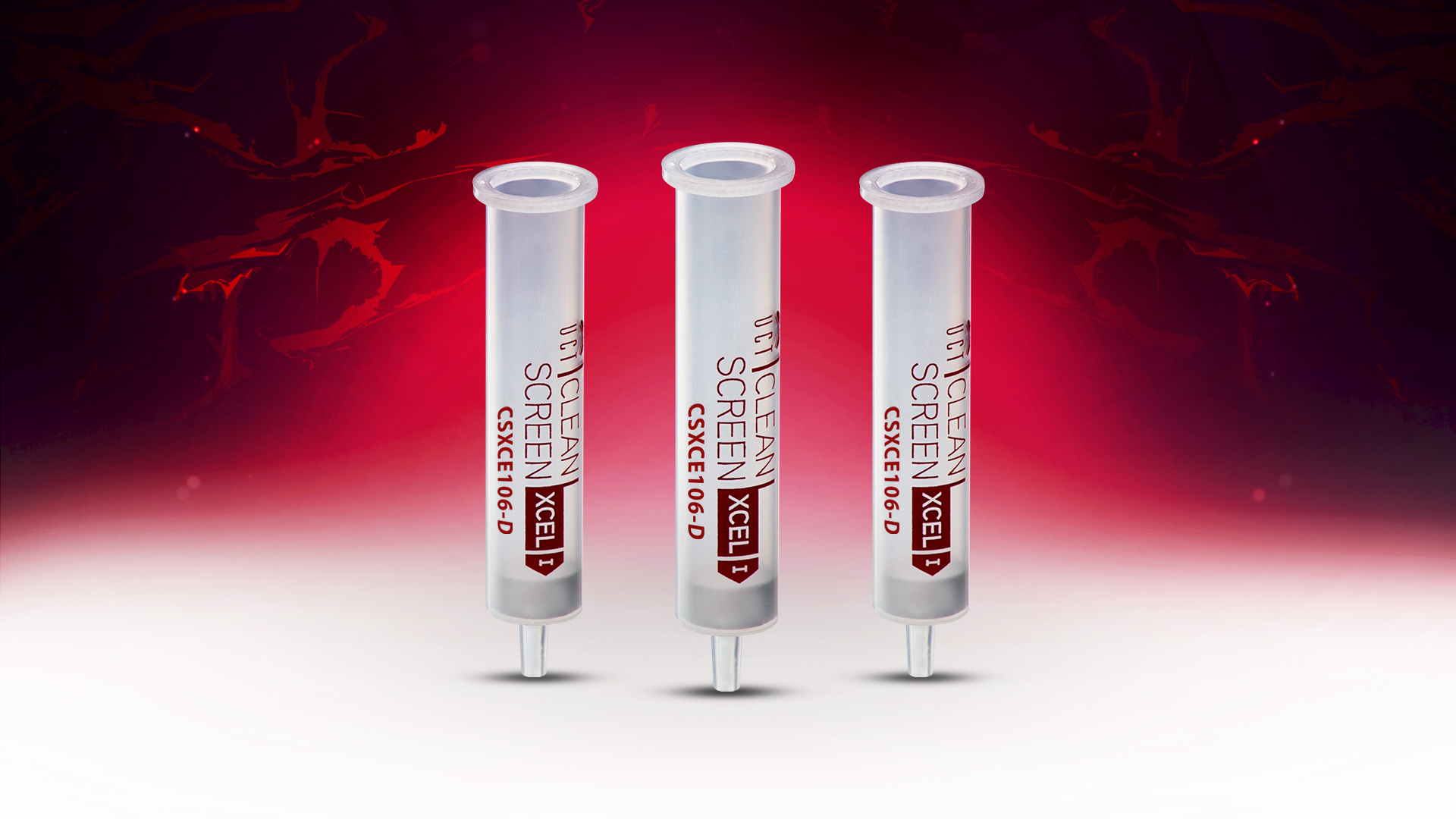
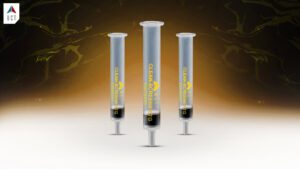
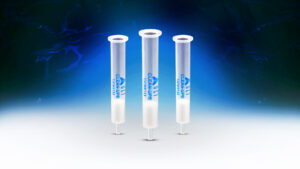
Compared to other classes of drugs, benzodiazepine abuse is relatively uncommon. However, there has been an upward trend of using them along with other drugs, such as alcohol and opioids, in order to achieve an enhanced overall high. Similar to other commonly abused compounds, such as cannabinoids or amphetamines, “legal” alternatives have been developed for benzos as well in an attempt to bypass the controlled substances act. Traditional benzodiazepines primarily function as neutral analytes, however, there are some that have weakly basic functional groups allowing for ionization at a fixed pH. The Clean Screen® XCEL I column has the capability of simultaneously extracting neutral and basic compounds, while eliminating the need for time-consuming column conditioning and extensive solvent usage for sample cleanup. Check out the method here.

Similar Posts

  • UCT Silane (TSPS) cited in Microbiology Article

    Numerous polymerase-chain-reaction (PCR) and isothermal amplification methods employed currently in molecular diagnostic assays have been developed, significantly improving assay sensitivity and specificity as well as shortening overall time. In spite of this objective, nucleic acid target amplification continues to present challenges for dealing with “false-positive” results due to environmental or reagent contaminants introduced during the testing process. This has been addressed in a recent article authored by Wanyuan Ao et al., published in PLoS ONE 12(2): e0171915 in which UCT silane amine-functional T-structure polydimethylsiloxane (TSPS) was described in the production of crystalline silicon wafers. In this paper, the authors describe a strategy that can distinguish between staphylococcus species truly present in a clinical sample from contaminating staphylococcus species introduced during the testing process.

  • Clean Screen® THC Sorbent Cited in THC-COOH Validation Paper

    Of all the analytical methods available to forensic toxicologists, testing for cannabinoids is one most requested extraction approaches via the technical support team.  In a recent paper authored by Nicolas Fernandez et al., from Universidad de Buenos Aires published in Acta Toxicol. Argent. ((2016) 24 (2): 116-127) UCT’s world famous Clean Screen® THC was employed as the extraction sorbent in an accurate, reproducible, and validated gas chromatography-mass spectrometry (GC-MS) method for the quantitation of 11-nor-9-carboxy- Δ9 -tetrahydrocannabinol (THCCOOH), the major metabolite of Δ9 -tetrahydrocannabinol in urine.

  • UCT Enviro-Clean ® 521 Cartridges cited in Emerging Disinfection Bi-Products Article

    In produce processing, water used to wash both fresh and fresh-cut produce is commonly treated with sanitizers for the purpose of controlling pathogens and minimizing microbial cross-contamination. Chlorine-based sanitizers are most commonly used for produce processing in the food industry (FAO/WHO, 2008). While chlorine’s efficacy in controlling pathogens is well recognized, one of the main concerns is the reactivity of chlorine with organic and inorganic substances to generate harmful disinfection bi-products (DBPs) and emerging DBPs of concern including haloacetonitriles, halonitromethanes, haloacetamides, and nitrosamines (NISAMs). Monitoring these DBPs is necessary to protect food safety but comprehensive analytical methods have been lacking. 

    In a recent paper authored by Wan-Ning Lee et al., published in Food Chemistry (https://doi.org/10.1016/j.foodchem.2018.02.134), UCT’s Enviro-Clean® 521 sorbent (200 mg/ 6 mL) was employed to analyze DBPs and NISAMs in food wash water. 

  • XtrackT® Cited in New Psychoactive Substances Article

    In a recent paper published in Drug Testing and Analysis, UCT’s Xtract® solid phase extraction sorbent was used to extract a diverse range of new psychoactive substances (NPS) from samples of waste water. Temporal trends were found in wastewater with distinct tendencies for synthetic cathinones visible over the period studied.

  • UCT Specialty Chemical cited in Mechanobiology Study

    In a recent article published in Lab on a Chip, authors Donghee Lee et al., (DOI: 10.1039/C8LC00320C), used UCT’s specialty chemical (Tridecafluoro-1, 1, 2, 2-Tetrahydrooctyl)-1- Trichlorosilane (T2492-KG) in a mold-making process. This involved the production of a microfluidic cell compression device that improved a microfluidic device proposed previously by equipping it with an array of cell compression units. The device contained a 5×5 array of alginate-chondrocyte constructs. This microfluidic cell was employed to investigate human cartilage cells. T2492-KG played an integral part of this procedure.

  • UCT’s Putting a New Spin on dSPE!

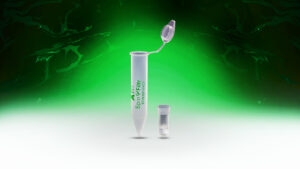
    UCT is excited to launch our new SpinFiltr™ approach to dSPE clean-up!  Our dual chamber approach features built in submicron filtration and allows the user to simply discard the top device containing unwanted matrix and sorbent following centrifugation. Additional sample volume is recovered without worrying about the disruption of centrifugation layers. UCT is taking the hassle out of dSPE. Try a sample today out of our initial 5 available configurations! Get more details by visiting: https://sampleprep.unitedchem.com/media/at_assets/tech_doc_info/SpinFiltr_Flyer_2016_1.pdf or by checking out our recent NACRW poster presentation featuring this product: https://sampleprep.unitedchem.com/media/at_assets/tech_doc_info/NACRW_Poster_2016.pdf

Leave a Reply