Greener, Low-Volume Monitoring of PAHs in Groundwater: A DCM-Free SPE Approach
Groundwater is water stored beneath the Earth’s surface in soil pores and rock fractures, replenished by rain and snow that accumulates in aquifers. It is a vital resource used for irrigation, industry, and, when treated, as drinking water for communities. Because it moves slowly underground, groundwater dissolves minerals like calcium, magnesium, and bicarbonate, making it harder and more stable in composition than surface water, though typically lower in oxygen and organic matter. Contamination can occur from leaks, spills, runoff, or improper disposal of materials such as coal tar, asphalt, and petroleum products, which release polycyclic aromatic hydrocarbons (PAHs). [1]
PAHs are a class of molecules made of fused aromatic benzene rings arranged in planar structures. They are toxic, carcinogenic, and can persist in groundwater due to slow degradation under low-oxygen conditions, posing long-term risks to water quality. [2] Usually, PAHs are monitored using GC-MS analysis, which requires a liquid-liquid extraction into a GC-amenable solvent. Dichloromethane (DCM) has been commonly used as an extraction solvent, but its recent ban under the EPA Toxic Substances Control Act has made its use and disposal more complicated for laboratories. [3]
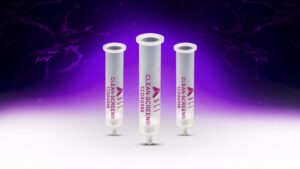
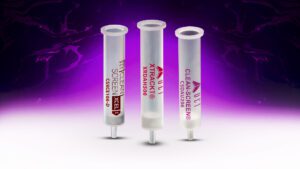
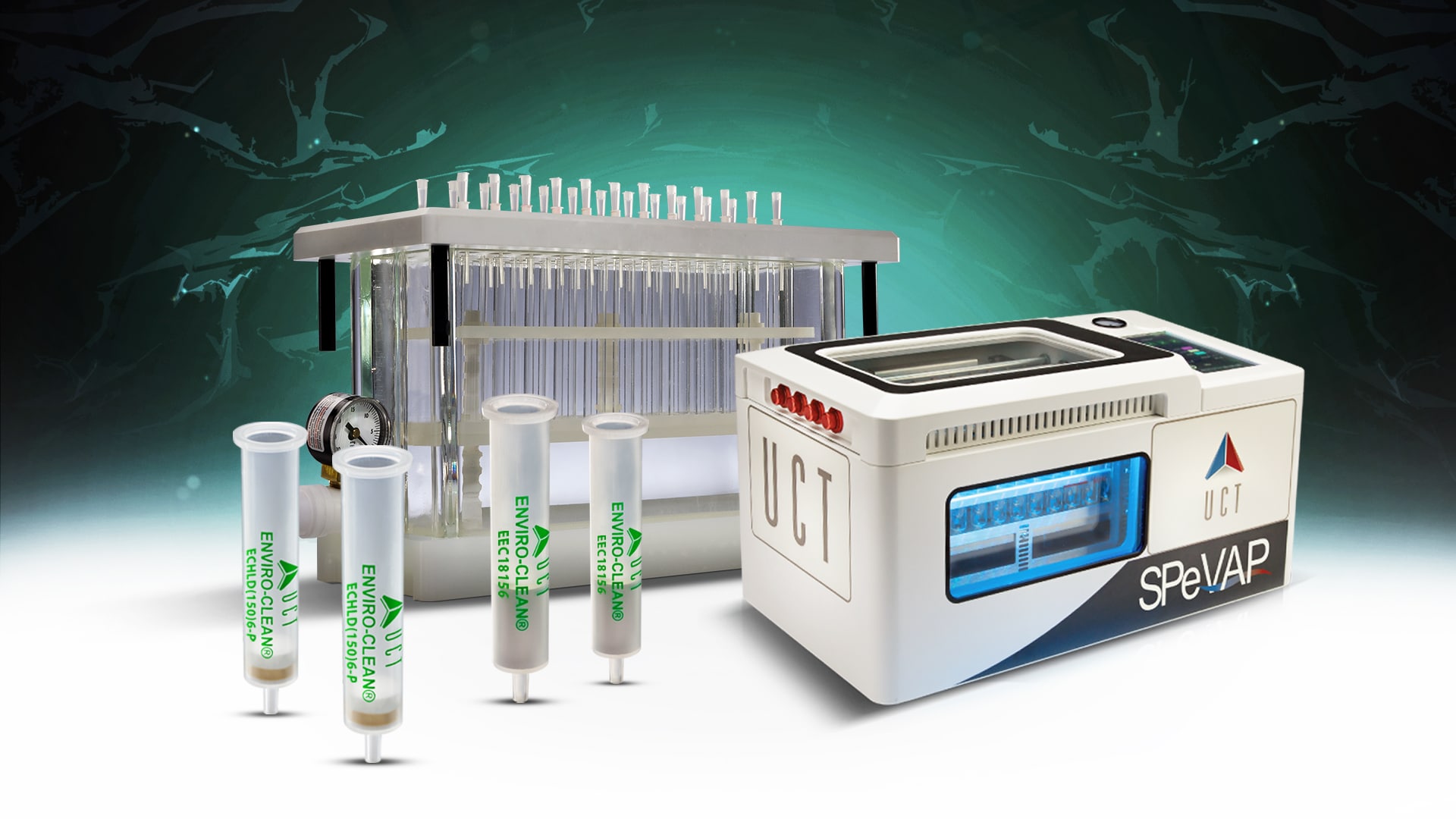
UCT has developed a low-volume solid phase extraction (SPE) method using an alternative extraction solvent mixture for trace-level analysis of PAHs in water. Both silica-based reverse phase (octadecylsilane, C18) and polymeric reverse phase (styrene–divinylbenzene, DVB) sorbents produced accurate results. GC-MS in SIM mode was used to achieve the required detection limits while reducing the sample volume by a factor of ten compared to traditional PAH analytical methods, such as EPA 8310.[4] An acetone: hexane solvent mixture was used as an alternative extraction solvent to DCM, which is traditionally the solvent of choice. To replicate realistic field samples, a simulated groundwater matrix was prepared by combining reagent water with representative minerals and an organic carbon source. In this matrix, recoveries of acenaphthylene and anthracene were reduced, likely due to oxygenation from matrix components, but results remained within acceptable EPA quality control limits.[5] This approach assists laboratories in reducing sample collection volume and eliminating the use of DCM, enabling the adoption of greener chemistry practices while remaining compliant with EPA standards.
See the application note here.
- Patel, A. B.; Shaikh, S.; Jain, K. R.; Desai, C.; Madamwar, D. Polycyclic Aromatic Hydrocarbons: Sources, Toxicity, and Remediation Approaches. Front. Microbiol. 2020, 11, 562813. https://doi.org/10.3389/fmicb.2020.562813
- Meckenstock, R. U.; Safinowski, M.; Griebler, C. Anaerobic degradation of polycyclic aromatic hydrocarbons. FEMS Microbiol. Ecol. 2004, 49 (1), 27–36. https://doi.org/10.1016/j.femsec.2004.02.019
- U.S. Environmental Protection Agency. Regulation of Paint and Coating Removal for Consumer Use: Methylene Chloride; Docket ID EPA-HQ-OPPT-2016-0231-0980; Regulations.gov, 2016.
- U.S. Environmental Protection Agency. Method 8310: Polynuclear Aromatic Hydrocarbons by HPLC. Revision 0, SW-846 Test Methods for Evaluating Solid Waste, Physical/Chemical Methods; U.S. EPA: Washington, DC, September 1996.
- U.S. Environmental Protection Agency. Method 625.1: Base/Neutrals and Acids by GC/MS. Revision 1, 40 CFR Part 136, Guidelines Establishing Test Procedures for the Analysis of Pollutants; U.S. EPA: Washington, DC, 2016.