
EPA Method 1633A for PFAS Analysis
Reliable PFAS Testing Solutions for EPA Method 1633A Applications. Comprehensive LC-MS/MS protocol for detecting PFAS in environmental samples.
What is EPA Method 1633A?
EPA Method 1633A is a comprehensive analytical method developed by the U.S. Environmental Protection Agency for the determination of per- and polyfluoroalkyl substances (PFAS) in various environmental matrices. This validated LC-MS/MS protocol enables laboratories to accurately detect and quantify 40 different PFAS compounds in wastewater, surface water, groundwater, soil, biosolids, sediment, landfill leachate, and fish tissue samples.
As part of the EPA’s PFAS Strategic Roadmap, Method 1633A provides a standardized approach for monitoring these persistent “forever chemicals” that have become a significant environmental and public health concern. The method utilizes solid-phase extraction (SPE) for sample preparation, followed by liquid chromatography-tandem mass spectrometry (LC-MS/MS) for precise identification and quantification. UCT offers a complete range of PFAS-verified consumables and equipment designed specifically to meet the stringent contamination-control requirements of EPA Method 1633A.
- Part of the EPA’s PFAS Strategic Roadmap for nationwide monitoring
- Validated protocol for 40 specified PFAS compounds including PFOA and PFOS
- Applicable to 8 different sample matrices including water, soil, and tissue
- Uses isotope dilution for accurate quantification at low ng/L levels
EPA Method 1633A Workflow
The method follows a systematic three-step process for reliable PFAS detection and quantification.
Successful PFAS analysis under EPA Method 1633A depends on rigorous contamination control at every stage of the workflow. Unlike most environmental methods, PFAS contamination can originate from the laboratory equipment itself — PTFE tubing, fluoropolymer-lined caps, and even standard SPE manifold components can introduce background PFAS that compromise results. UCT’s PFAS-verified product line — including PFAS-verified WAX SPE cartridges, stainless steel and HDPE manifold systems, and polypropylene labware — is engineered to eliminate these contamination sources, allowing laboratories to consistently achieve the low ng/L detection limits required by the method. Each step below requires PFAS-verified materials to ensure valid results.
Sample Preparation
Collect samples using PFAS-verified containers and equipment. Add isotopically labeled surrogate standards to each sample for quality control and accurate quantification.
Solid-Phase Extraction
Extract PFAS compounds from the sample matrix using weak anion exchange (WAX) SPE cartridges. This concentrates analytes and removes interfering matrix components.
LC-MS/MS Analysis
Analyze purified extracts using liquid chromatography-tandem mass spectrometry for precise identification and quantification of target PFAS compounds.
Applicable Sample Matrices
EPA Method 1633A is validated for PFAS analysis across multiple environmental sample types.
One of the key advantages of EPA Method 1633A over earlier PFAS methods is its validation across eight distinct environmental matrices, making it the most versatile standardized PFAS analytical method available. Aqueous matrices — including surface water, groundwater, wastewater effluent, and landfill leachate — are extracted using weak anion exchange (WAX) SPE cartridges, while solid matrices like soil, sediment, and biosolids require an initial solvent extraction step before SPE cleanup. The method also covers fish tissue analysis, which is critical for assessing bioaccumulation in aquatic ecosystems. Each matrix type has specific sample preparation, extraction, and QC requirements detailed in the method. Contact your local UCT sales representative for help selecting the right PFAS-verified consumables for your specific matrix types.
Drinking Water
Surface water and groundwater sources for public water supplies
Wastewater
Industrial and municipal wastewater effluent samples
Soil & Sediment
Environmental soil samples and aquatic sediments
Biosolids & Tissue
Biosolids, landfill leachate, and fish tissue samples
Recommended Products for EPA Method 1633A
UCT offers a complete range of consumables and equipment designed to meet EPA Method 1633A requirements.
Every component in the EPA Method 1633A sample preparation workflow should be verified to prevent the introduction of PFAS background contamination that can compromise analytical results. UCT’s dual phase ECWAX cartridges combine weak anion exchange sorbent with graphitized carbon black (GCB) for simultaneous PFAS extraction and matrix cleanup in a single pass — available in 500 mg and 200 mg formats to suit different sample volumes and throughput needs. For laboratories requiring a dedicated WAX cartridge, the Enviro-Clean® WAX 150 mg provides reliable weak anion exchange extraction with PFAS-verified polyethylene frits. Browse the complete PFAS product catalog for additional cartridge sizes and accessories.
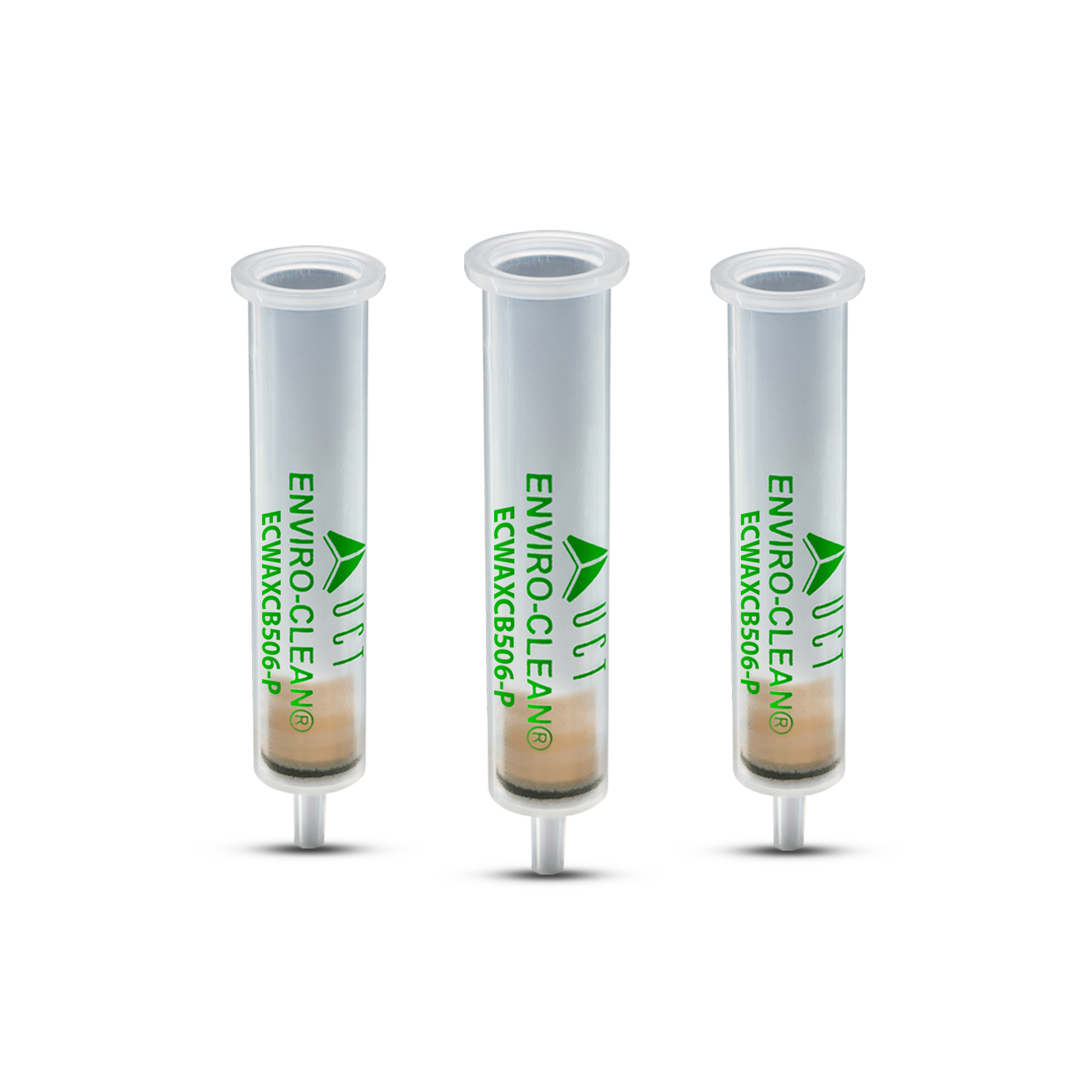
PFAS Analysis Dual Phase Cartridge 500 mg ECWAX + 50 mg Graphitized Carbon Black PE Frits
Dual phase cartridge combining 500 mg ECWAX and 50 mg graphitized carbon black (GCB) for effective sample cleanup in PFAS analysis.
View Product
PFAS Analysis Dual Phase Cartridge 200 mg ECWAX + 50 mg Graphitized Carbon Black PE Frits
Dual phase cartridge combining 200 mg ECWAX and 50 mg graphitized carbon black (GCB) for effective sample cleanup in PFAS analysis.
View Product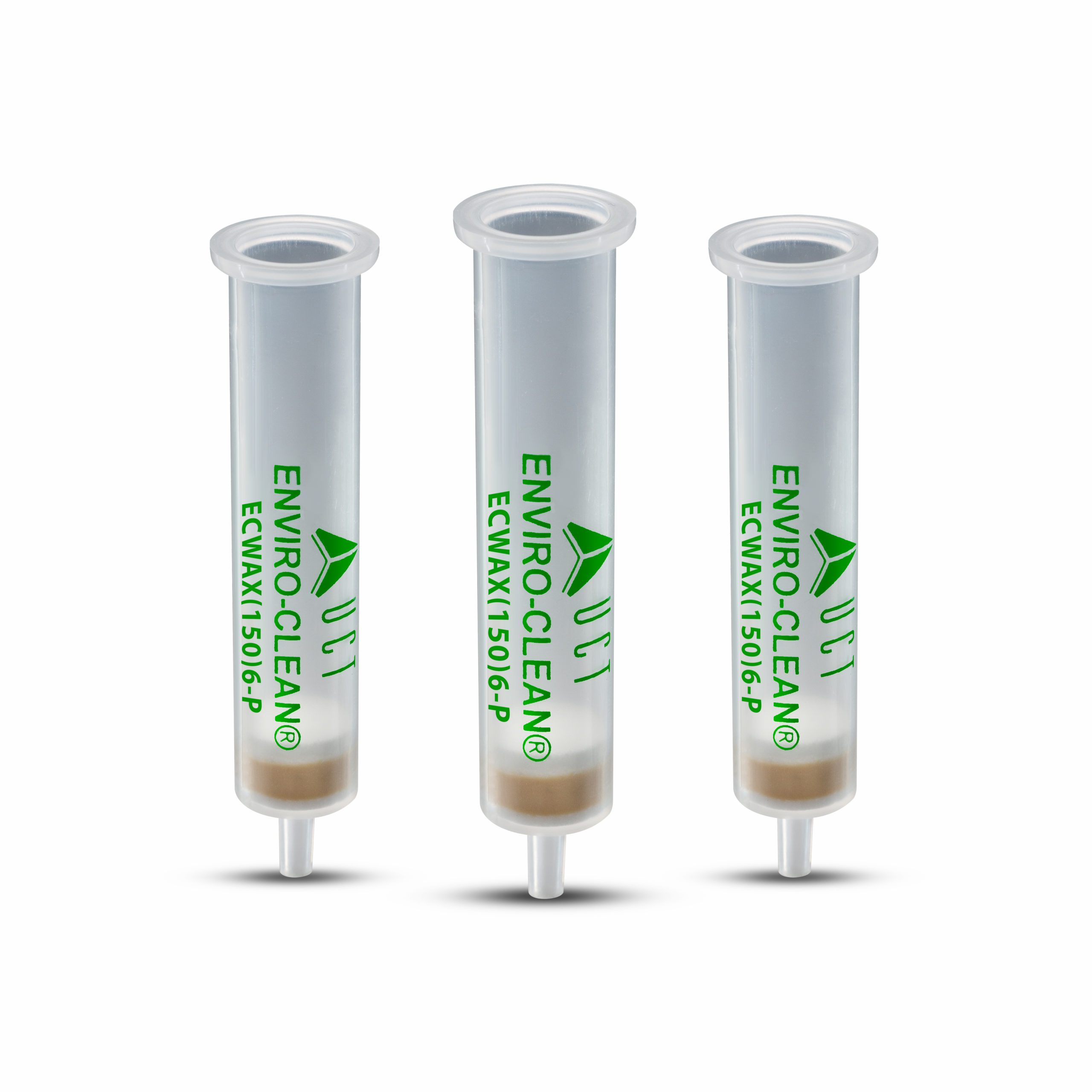
Enviro-Clean® WAX PE Frits 150 mg 6 mL
Weak anion exchange cartridges ideal for PFAS extraction in EPA Method 1633A workflows.
View ProductFrequently Asked Questions
Common questions about EPA Method 1633A and PFAS analysis.
What PFAS compounds does EPA Method 1633A detect?
EPA Method 1633A is validated for 40 PFAS compounds, including PFOA, PFOS, and other perfluoroalkyl and polyfluoroalkyl substances. The method covers a range of chain lengths and functional groups commonly found in environmental contamination.
What sample matrices can be tested with EPA Method 1633A?
The method is validated for 8 matrices: non-potable water, wastewater, surface water, groundwater, soil, sediment, biosolids, landfill leachate, and fish tissue. Aqueous, solid, and tissue matrices have specific preparation requirements.
What equipment is needed for EPA Method 1633A?
Key equipment includes PFAS-Verified SPE cartridges (typically WAX), a vacuum or positive pressure manifold, LC-MS/MS system, and PFAS-verified labware. Every component in the EPA Method 1633A sample preparation workflow should be verified to prevent the introduction of PFAS background contamination. Browse UCT’s PFAS product catalog for a complete range of verified consumables.
What are the detection limits for EPA Method 1633A?
Detection limits vary by analyte and matrix but typically range from 0.5 to 100 ng/L in aqueous samples. The method uses isotope dilution quantification to achieve accurate results at these low concentrations.
Is EPA Method 1633A required for compliance testing?
While Method 1633A is currently the EPA’s recommended method for multi-matrix PFAS analysis, specific regulatory requirements vary by state and program. Many NPDES permits and state regulations now reference this method.
How do I prevent PFAS contamination during analysis?
Use PFAS-verified equipment and consumables, including SPE cartridges, manifolds, tubing, and collection vessels. Run method blanks with each batch and avoid PTFE-containing materials in the sample path. Contact your local UCT sales representative for guidance on building a fully PFAS-verified sample preparation workflow.